
Decorating a rental means working around one hard rule: leave no trace. This guide covers nine practical no damage apartment decor strategies that let you personalize your space without risking your security deposit. Each idea is chosen for real apartments, real budgets, and real results.
1. Command Strip Gallery Walls That Look Intentional, Not Accidental
A gallery wall is one of the fastest ways to make a rental feel like home, but most renters hang it wrong. The mistake is choosing frames randomly and spacing them unevenly, which makes the wall look cluttered rather than curated.
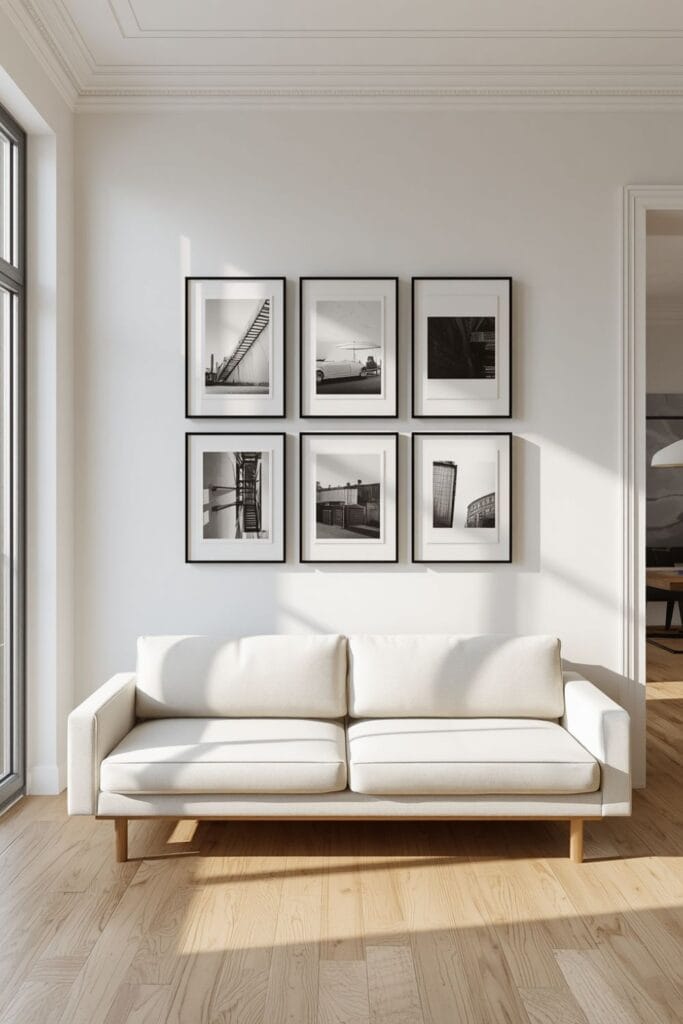
Start by laying your frames on the floor and arranging them before anything goes up. Use a consistent color palette for frames, either all black, all white, or all natural wood, so the wall reads as one cohesive design decision rather than a collection of afterthoughts. Command strips rated for the frame weight are the only hardware you need, and they remove cleanly from painted drywall when used correctly.
This works best on a blank accent wall behind a sofa or bed. Avoid walls with texture or wallpaper, since adhesive strips do not bond as reliably on uneven surfaces. The result is a styled, high-impact feature that installs in under an hour and comes down in minutes.
2. Peel-and-Stick Wallpaper Accent Walls With a Clean Edge
Removable wallpaper has improved dramatically. The current generation of peel-and-stick options applies flat, holds for years, and removes without tearing paint, provided your walls were primed correctly when painted. This is one of the most effective renter-friendly apartment decorating ideas for transforming a bedroom or dining space.
Choose one wall only. Doing an entire room in a rental is rarely worth the application time or the removal risk. A single accent wall behind a bed headboard or behind a dining table creates depth and visual interest without overwhelming a small space.
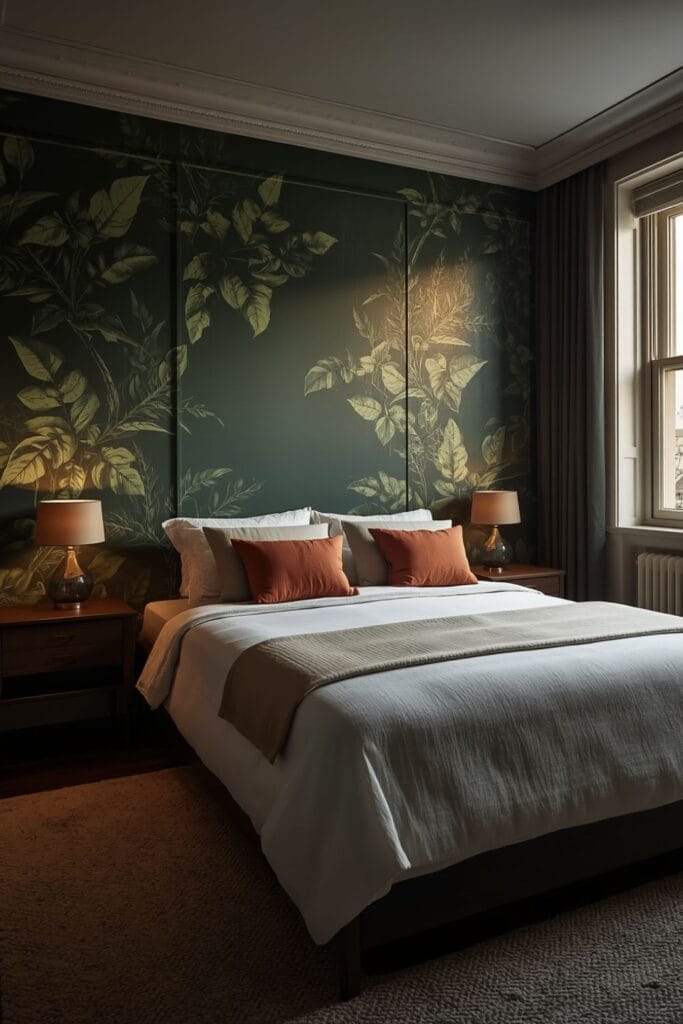
The most common mistake is applying it to fresh paint. Fresh paint needs at least 30 days to fully cure before adhesive wallpaper is safe to use without pulling color on removal. Always test a small corner piece first and leave it for 48 hours before committing to the full wall.
For best results, use a credit card to smooth air bubbles as you go and work from top to bottom in vertical strips. Geometric patterns and large botanicals are the strongest performers visually and photograph well for small apartment decorating content.
3. Freestanding Furniture Arrangements That Define Zones Without Walls
Open-plan apartments often feel undefined, and most renters make the mistake of pushing all furniture against the walls. This actually makes a room feel smaller and less functional, not more spacious.
Floating furniture away from walls creates natural zones for living, dining, and working without any construction. A sofa placed with its back to the kitchen, for example, instantly separates the living area from the cooking space. A console table behind the sofa doubles as a room divider and a display surface.
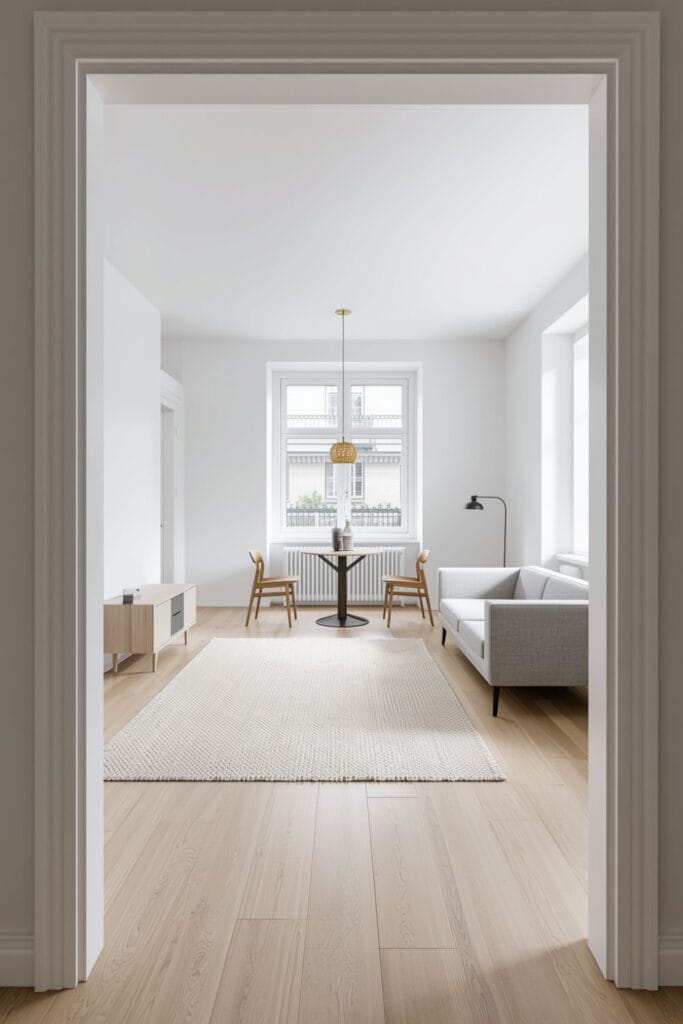
This approach works especially well in studio apartments and one-bedroom open plans where no damage apartment decor solutions need to do double duty. A large area rug anchors each zone and makes the separation feel intentional rather than accidental.
The key decision factor is traffic flow. Every zone needs at least 36 inches of clear walkway between furniture groupings. If your arrangement blocks natural movement from the door to the kitchen or bathroom, the layout is working against the space, not with it.
4. Tension Rod Room Dividers for Instant Privacy Without Drilling
A tension rod installed between two walls or inside a doorframe holds far more than a shower curtain. Floor-to-ceiling tension rods, available in adjustable lengths, can suspend fabric panels that act as soft room dividers, closet covers, or privacy screens in studio apartments.
This is one of the most underused no damage apartment decor solutions for studio renters who need to separate a sleeping area from a living area without building anything permanent. A pair of linen curtain panels hung from a tension rod creates a soft boundary that can be opened during the day and closed at night.
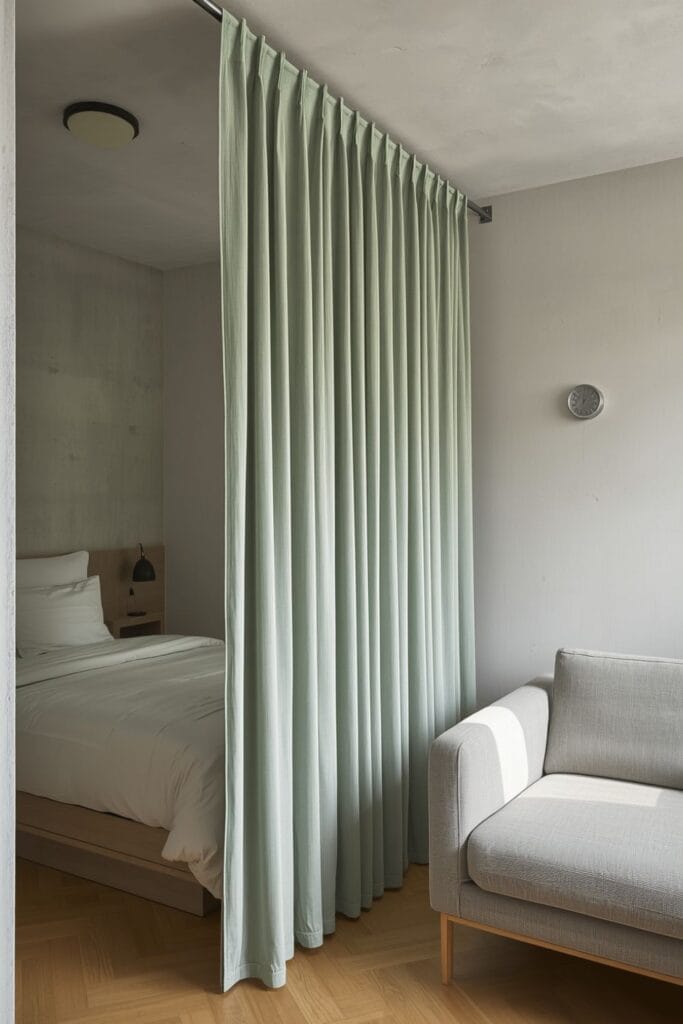
The key is choosing the right fabric weight. Lightweight sheers allow light to pass through and keep the space feeling open. Heavier blackout fabric panels create genuine visual separation and also help with sleep quality if your studio gets morning light. Either option installs in under 10 minutes and leaves no marks.
Avoid using thin, cheap curtain rods for this purpose. They bow under the weight of full-length panels. Look for tension rods with rubber-tipped ends and a thick diameter for stability across a wider span.
5. Leaning Shelves and Ladder Shelves for Vertical Storage Without Anchors
Wall anchors are the fastest way to lose part of your security deposit. Leaning shelves and ladder-style bookcases solve vertical storage needs without a single screw going into drywall. They lean against the wall at a slight angle, and a full load of books or decor keeps them stable.
This works particularly well in living rooms and home offices where storage is needed but wall real estate is limited. A six-foot ladder shelf in a corner functions as both a bookcase and a display surface, adding height to a room that would otherwise feel flat and low.
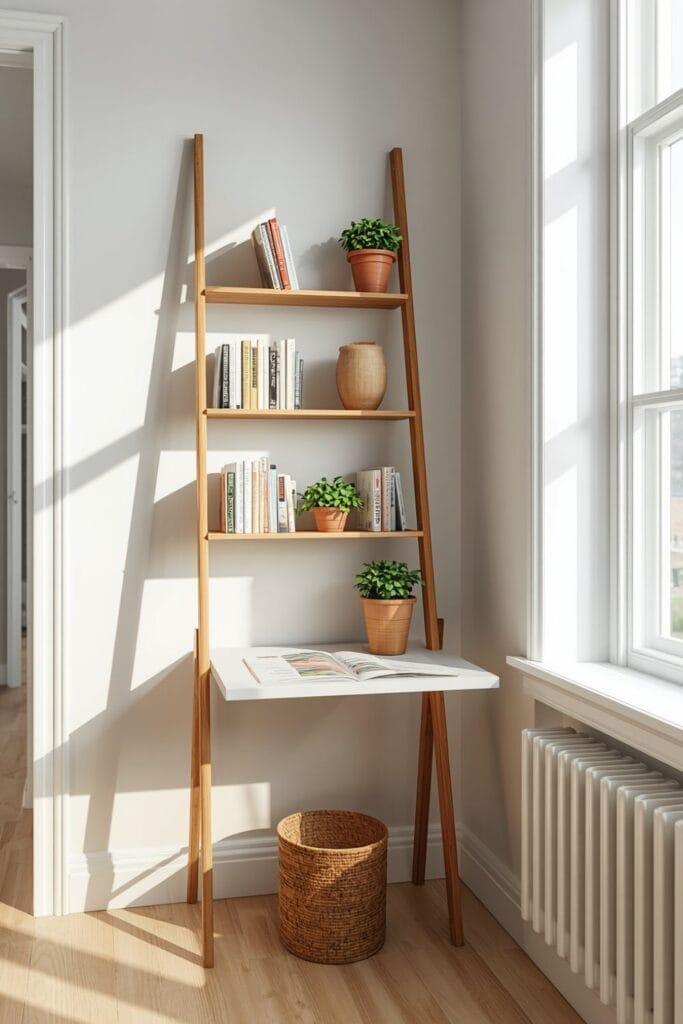
The practical limit is weight distribution. Place heavier items on the lower shelves and lighter decorative pieces on upper shelves. Placing heavy objects high on a leaning shelf increases the risk of tipping, especially on smooth hardwood or tile floors. A non-slip furniture pad under the base legs solves this.
For small apartments, a narrow ladder shelf takes up roughly 18 inches of floor space and can hold a significant amount of storage. It is one of the more space-efficient renter-friendly apartment decorating ideas that also photographs well and adds visual height to a room.
6. Removable Tile Stickers That Upgrade a Rental Bathroom or Kitchen Backsplash
Dated tile is one of the most common complaints in rental apartments, and it is also one of the easiest fixes. Removable tile stickers apply directly over existing tile surfaces and require no grout, no adhesive primer, and no professional installation. They peel off without leaving residue when removed properly.
In a kitchen, covering an outdated beige tile backsplash with a clean white Moroccan or subway pattern sticker tile transforms the entire feel of the cooking area. In a bathroom, replacing the visual of dated floor-to-ceiling tile with a fresh pattern makes the space feel renovated without touching anything structurally.
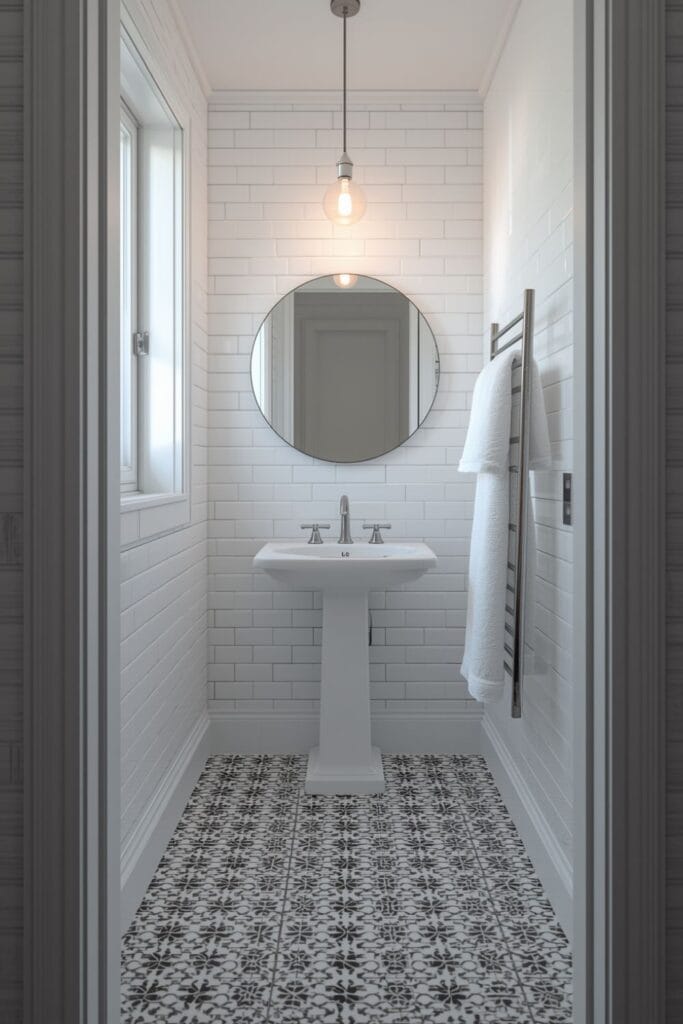
The most important factor is surface preparation. Tiles must be completely clean, grease-free, and dry before application. Any grease residue, especially in a kitchen, will prevent proper adhesion and cause edges to lift within weeks.
This is one of the more impactful small apartment decorating ideas because it targets the elements of a rental that are hardest to ignore. Stick to simple geometric or neutral patterns that will not clash with the fixed elements of the space like cabinetry or countertop color.
7. Adhesive Hooks and Strips That Handle Real Weight for Functional Wall Organization
The standard advice is to use adhesive hooks for lightweight items only. That advice is outdated. Heavy-duty adhesive strips rated for 7 to 16 pounds per hook now handle coats, bags, hats, pot lids, cutting boards, and even small shelving units. This makes them a genuinely functional part of no damage apartment decor rather than just a light-duty workaround.
In an entryway, a horizontal row of uniform adhesive hooks replaces the need for a drilled coat rack. In a kitchen, adhesive hooks on the inside of cabinet doors hold lids, measuring cups, and small tools, which frees up drawer space without any permanent modification.
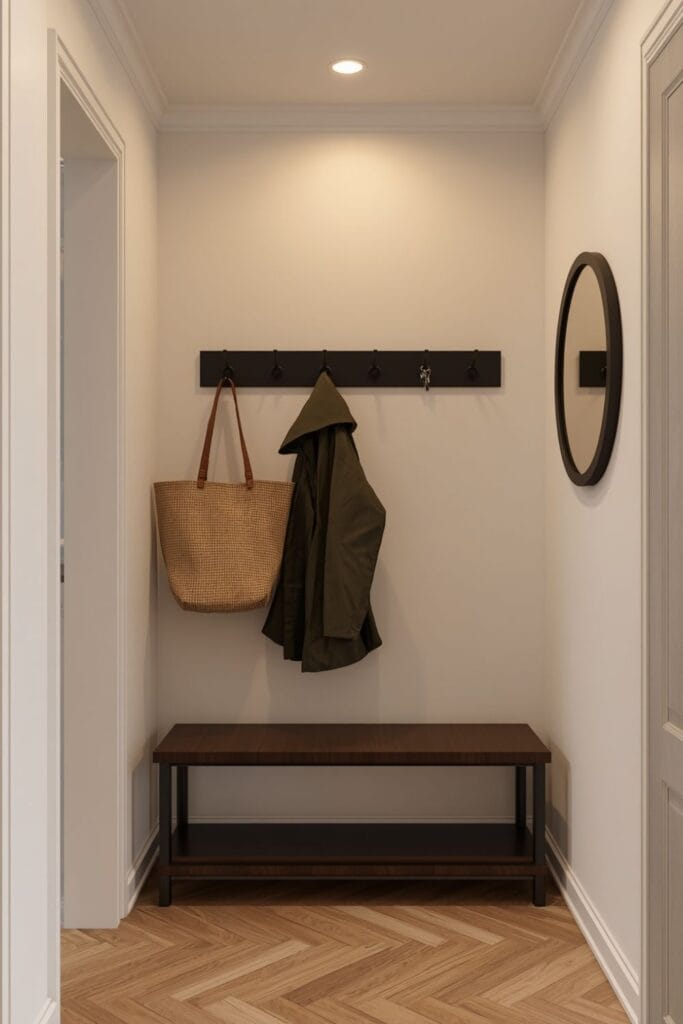
The mistake most renters make is overloading a single hook or applying hooks to surfaces that are not rated for adhesive, like brick, stone, or unsealed wood. These hooks perform best on smooth painted drywall and sealed surfaces. Always check the weight rating per hook, not per strip pair.
Placement matters as much as product choice. Group hooks visually so they look like a deliberate design decision rather than a collection of mismatched hardware. Matching finishes, whether matte black, brushed brass, or chrome, across all hooks in a space creates a cohesive look.
8. Curtain Rods Mounted With Tension or Over-Door Hardware for Floor-to-Ceiling Drama
Floor-to-ceiling curtains make a rental apartment feel significantly more elevated, but most renters skip them to avoid drilling above windows. Tension curtain rods that fit inside the window frame and over-door curtain rod brackets that hang from the top of a window frame solve this without any wall contact.
Hanging curtains high and wide, with the rod mounted close to the ceiling and the panel extending 6 to 12 inches beyond the window frame on each side, is the single biggest visual improvement most apartments can receive. It makes ceilings feel taller and windows feel larger.
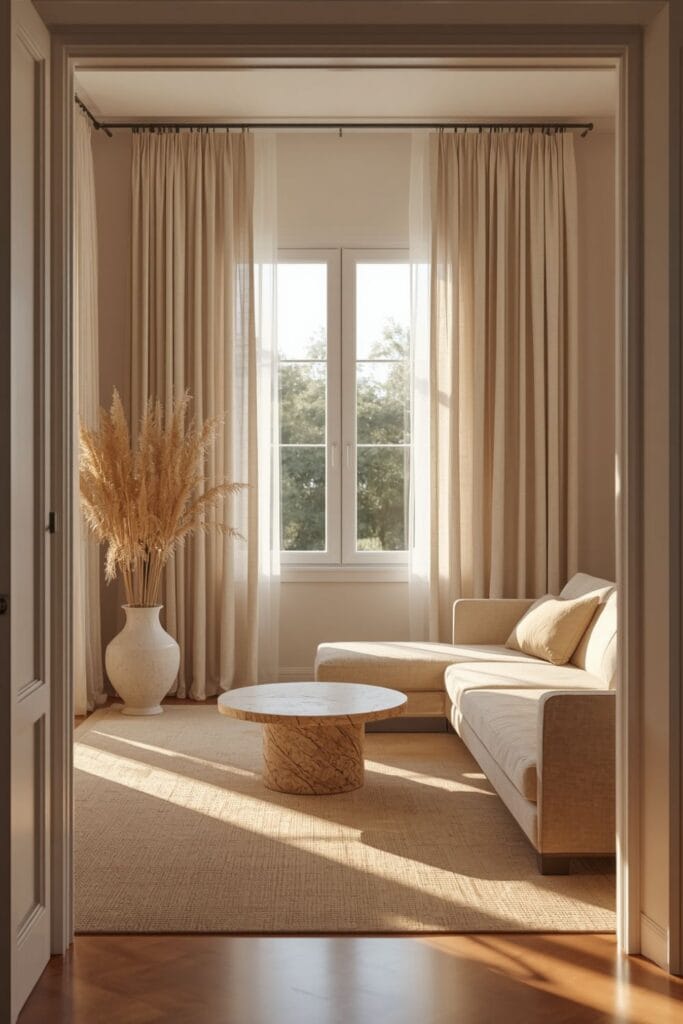
The most common mistake is hanging curtains at the exact top of the window frame at standard height. This shortens the perceived ceiling height and makes a room feel compressed. The higher the curtain rod, the better the room reads visually.
For renters, the over-door rod bracket system works exceptionally well for sliding glass doors and wide window spans where tension rods cannot maintain consistent horizontal pressure. Pair it with linen or velvet panels in a neutral tone for a result that photographs like a professionally styled interior.
9. Freestanding Room Accents That Add Architecture Without Touching Walls
Arched mirrors, tall decorative screens, freestanding planters, and floor lamps all function as architectural elements without requiring any wall contact. These pieces create visual structure, define corners, and add the kind of layered depth that makes a rental look styled rather than temporary.
A large arched mirror leaned against a wall in a living room or bedroom reflects light, adds perceived square footage, and provides the vertical emphasis that rental apartments often lack. A decorative folding screen in a corner adds texture and partially conceals a cluttered storage area or an awkward architectural feature like an exposed pipe.
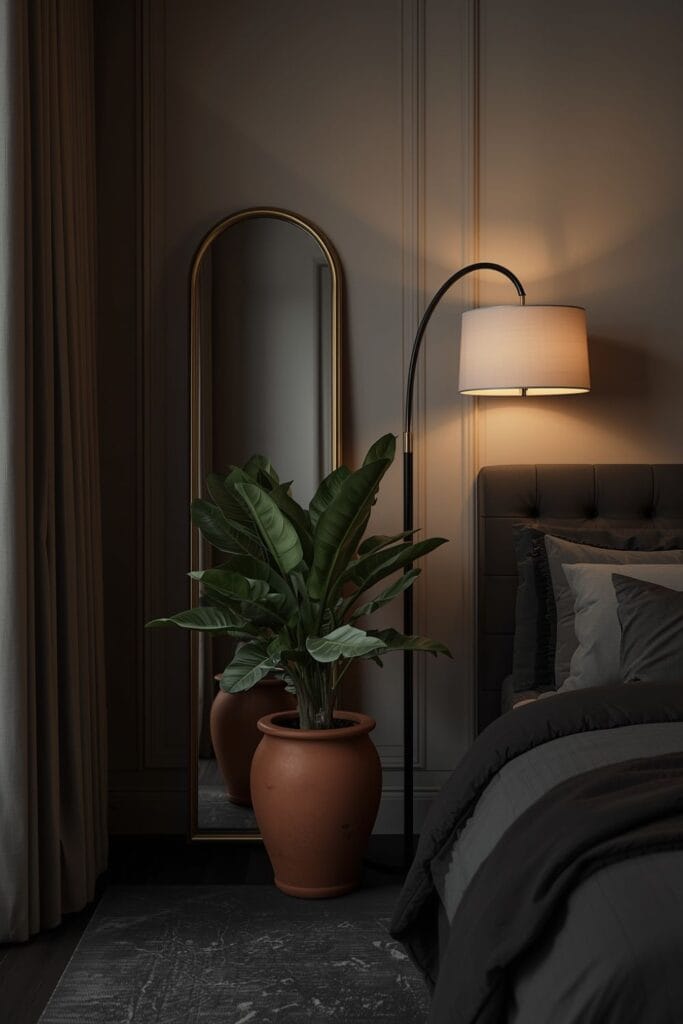
The decision-making factor here is scale. Undersized versions of these pieces fail to make the visual impact they are intended for. A floor mirror should be at least 60 inches tall to create proper architectural presence. A floor lamp should reach at least 60 to 70 inches to provide overhead-quality ambient light without ceiling fixtures.
These freestanding apartment decorating ideas are especially useful in spaces where walls cannot be touched at all, such as apartments with wallpapered walls or textured finishes where adhesive products are not safe to use.
Final Thoughts
Every idea in this guide is chosen specifically for renters who want a well-designed home without the risk of losing their deposit. No damage apartment decor is not about compromise. It is about choosing the right tools and techniques for each surface and each goal. Whether you are working with a studio or a multi-room apartment, these strategies give you real decorating control without touching a single wall permanently.
Save this post so you have it when you are ready to start decorating your rental. Each section works as a standalone project, so you can move through them at your own pace. For more renter-friendly interior ideas, explore content on freestanding furniture layouts, removable wallpaper combinations, and tension rod styling to keep building a space that feels fully yours.