
Choosing the right dining table is harder than it looks, and if you have been browsing round kitchen table ideas 2026, you already know how overwhelming the options can get. This guide cuts through the noise and gives you 10 specific, practical setups — each one explained by size, material, room type, and what to avoid — so you can make a confident decision for your space.
1. The Small Round Table That Makes a Tight Kitchen Dining Nook Actually Function
A round table with a diameter between 36 and 42 inches is one of the most practical solutions for a kitchen dining nook that feels too small for a standard rectangular table. The absence of corners means you gain usable circulation space on all sides, and two to four people can sit comfortably without anyone feeling pushed against a wall.
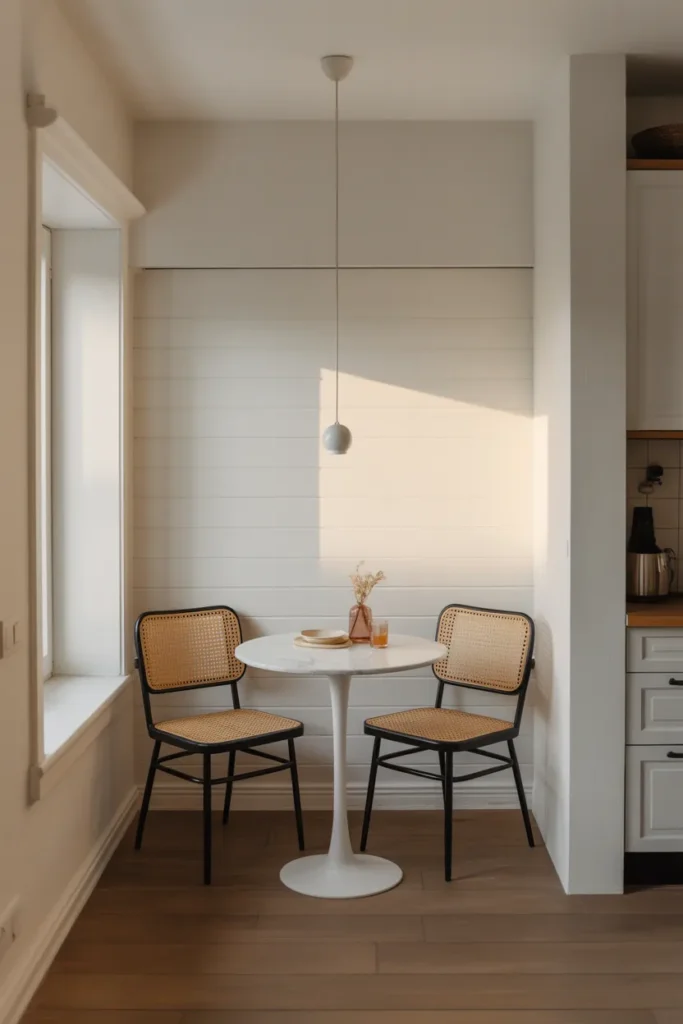
The reason this layout works in tight spaces is geometry. A round table occupies the same square footage as a small rectangular one but allows chairs to pull out at any angle, which is critical when you have a wall on two or three sides. You are not fighting a fixed corner every time someone sits down or stands up.

Where this goes wrong is scale. Many homeowners choose a table that is too small, thinking it will save more space, and end up with a surface that cannot hold a full meal for the household. For two people dining regularly, 36 inches is the floor. For four people, go to 48 inches even if it feels slightly large in the store.
2. The 48-Inch Round Table That Seats Four Without Crowding an Open-Plan Kitchen
In an open-plan kitchen and living space, a 48-inch round table creates a natural gathering point that does not visually block the flow between zones. It is large enough to seat four adults comfortably for a full meal, and the circular shape allows conversation across the table in a way that a long rectangular table does not.
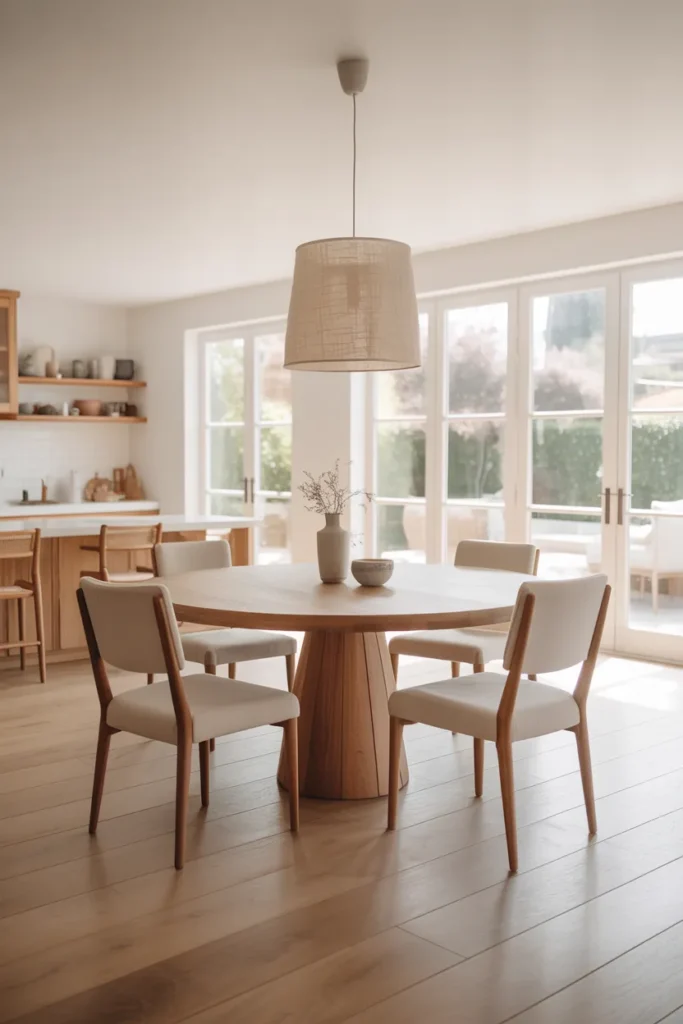
This works particularly well when the dining zone sits between the kitchen island and the living area. The round shape softens the hard lines of cabinetry and rectangular sofas, creating a visual transition that feels intentional rather than accidental. It is one of the most commonly overlooked round kitchen table ideas for open-plan homes.
Position matters significantly here. Center the table under a pendant or chandelier and make sure there is at least 36 inches of clearance on all sides for chairs to pull out and for someone to walk behind a seated person without squeezing. Less than 36 inches on any side and the space immediately feels cramped regardless of how good the table looks.
3. The Pedestal Base Round Table That Solves the Leg Problem in Small Dining Rooms
A pedestal base, where a single central column supports the tabletop instead of four corner legs, eliminates the most frustrating seating problem in small dining rooms. With a four-leg table, at least one person usually ends up straddling a leg or sitting at an awkward angle. A pedestal base gives every seat equal, unobstructed legroom.
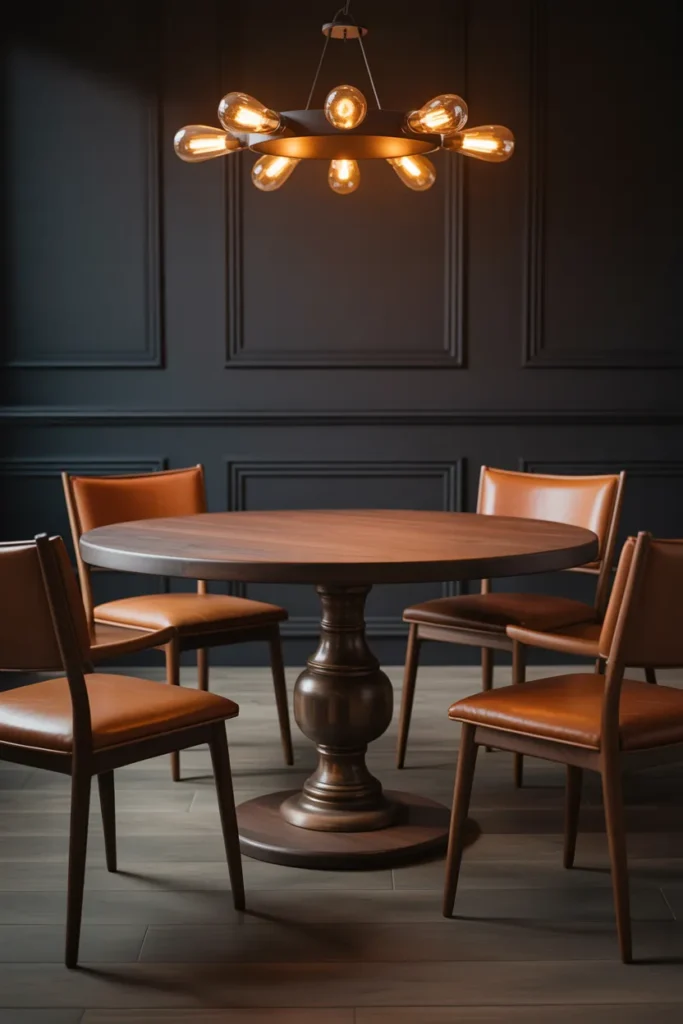
This is especially important when you are seating five or six people around a 54 or 60-inch round table. At that diameter, the corner-leg problem becomes serious. A pedestal base is not just an aesthetic choice at that size — it is a functional one that makes the difference between guests eating comfortably and guests shifting around all evening.
The structural trade-off is stability. A pedestal base with a wide, heavy foot handles everyday use well, but a narrow or lightweight pedestal can wobble under pressure. If you have young children or anyone who tends to lean hard on table edges, test the base stability before purchasing. A cast iron or solid wood pedestal is significantly more stable than a thin metal tube version.
4. The Marble Round Table That Works as a Design Anchor in a Neutral Kitchen
A round table with a genuine or engineered marble top performs a specific design function that wood and laminate surfaces cannot replicate — it anchors a neutral kitchen palette without adding color. The natural veining in marble reads as pattern and texture simultaneously, which means the table becomes the visual focal point of the room without competing with cabinetry or wall color.
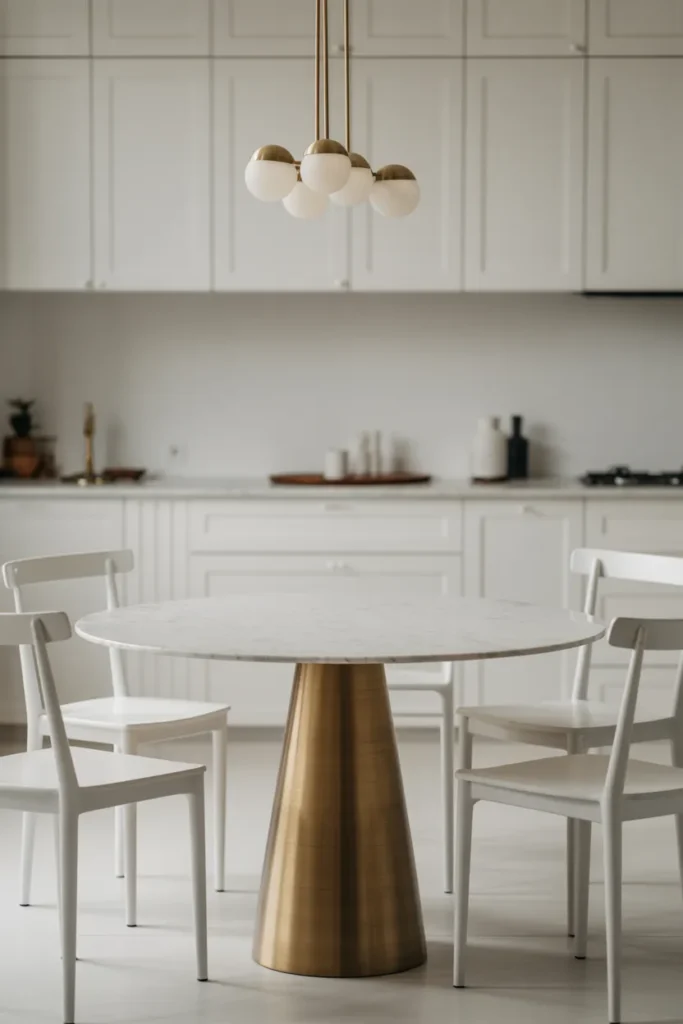
This is the right choice when your kitchen and dining area are finished in whites, warm grays, or soft greiges and the space feels clean but flat. A marble round table adds weight and visual interest at the center of the room without requiring you to introduce new colors or decorative layers.
The maintenance reality is worth stating clearly. Natural marble etches and stains from acidic foods and liquids, including wine, citrus, and coffee. If your household uses the kitchen table for daily family meals, engineered marble or a high-quality sintered stone surface gives you a nearly identical look with significantly more durability. Reserve natural marble for lower-use dining spaces or households prepared to seal and maintain it regularly.
5. The Round Wood Table With Mixed Seating That Gives a Curated, Collected Look
Using a round wood table as the base and mixing two or three different chair styles around it creates a dining setup that looks deliberately curated rather than catalog-matched. This works because the round shape provides visual unity at the center, which gives you permission to vary the surrounding chairs without the space feeling mismatched.
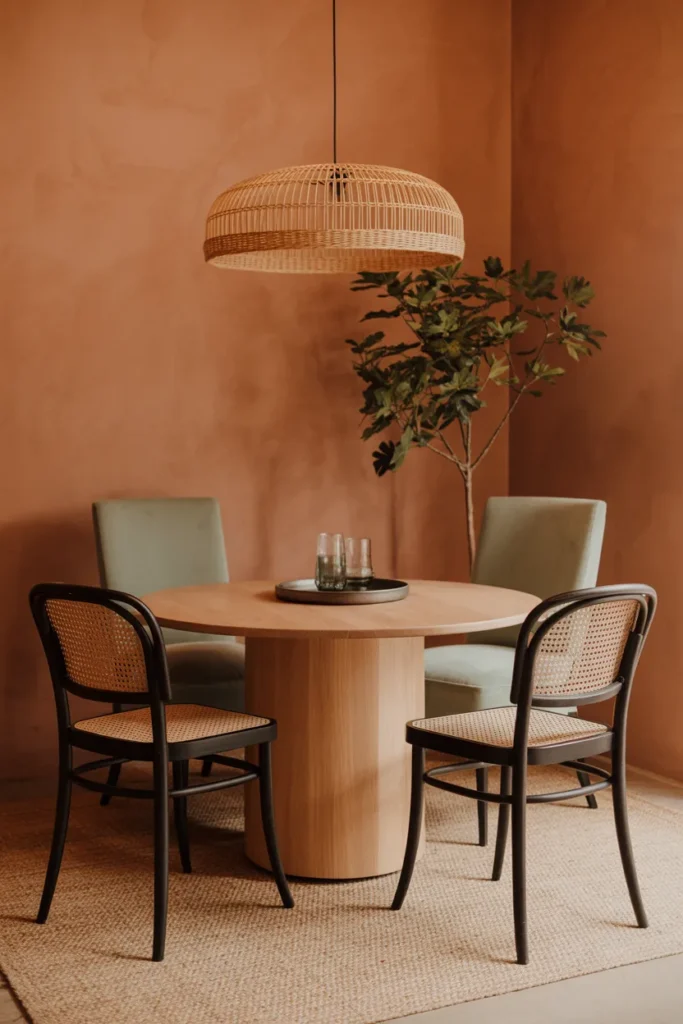
A practical combination that works consistently is two upholstered side chairs paired with two open-back wood or metal chairs. The upholstered chairs add softness and comfort for longer meals, while the open-back chairs keep the visual weight lighter and prevent the table area from feeling heavy. Round kitchen table ideas that incorporate mixed seating tend to photograph well and hold up aesthetically as trends shift.
The mistake to avoid is mixing too many different chair materials in a small space. Two chair types maximum is the reliable rule. Three or more different styles around a single table almost always looks chaotic rather than curated, regardless of how each individual chair looks on its own.
6. The Glass-Top Round Table That Visually Expands a Small Dining Area
A glass-top round table reads as transparent in a room, which means your eye travels through it to the floor below rather than stopping at a solid surface. In a small dining area, this creates the perception of more space without actually changing the square footage. It is one of the most effective visual tricks in small home interior design.
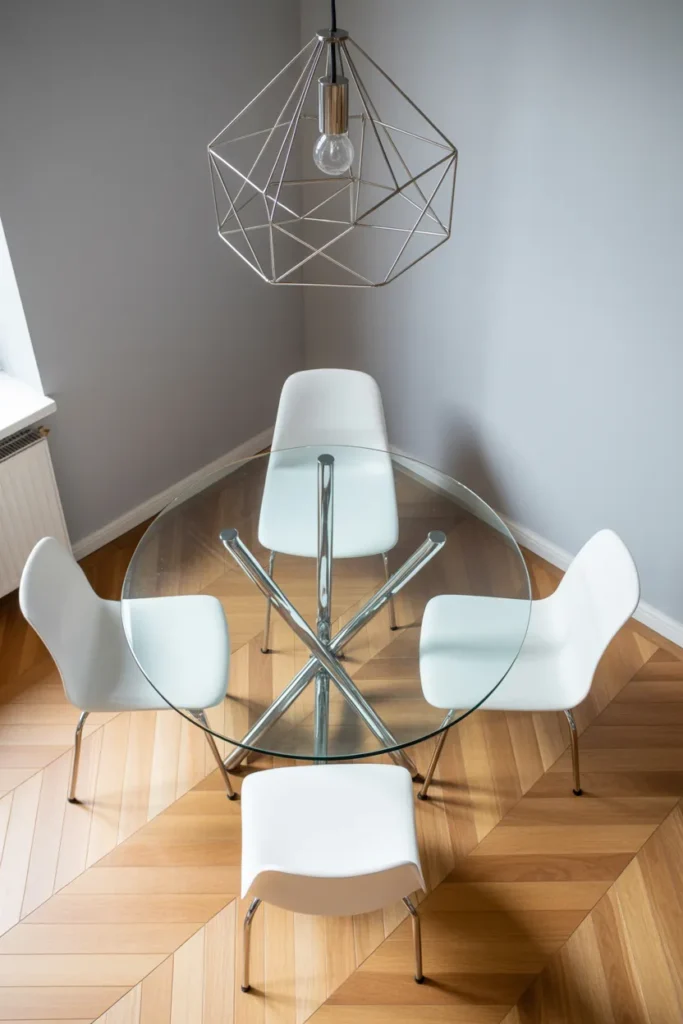
This works best when your flooring is a feature worth seeing — hardwood, patterned tile, or a good area rug. The glass top puts the floor on display rather than covering it, which adds a layer of visual depth to a room that might otherwise feel flat and enclosed.
The practical downside is maintenance. Glass shows fingerprints, water rings, and food smudges immediately and requires wiping down after nearly every use. For households with young children, a glass-top table is a high-maintenance choice. For couples, adults-only households, or formal dining rooms used selectively, the visual payoff is worth it. Tempered glass at a minimum of half an inch thickness is the safety standard — do not go thinner.
7. The Round Farmhouse Table With Bench Seating for Casual Family Kitchens
A round farmhouse table paired with a curved bench along one side and two or three chairs on the other creates a flexible, casual seating arrangement that works well for households with children or frequent informal gatherings. The bench accommodates variable numbers of people without requiring additional chairs, and the round shape keeps the setup from feeling as rigid as a rectangular farm table typically does.
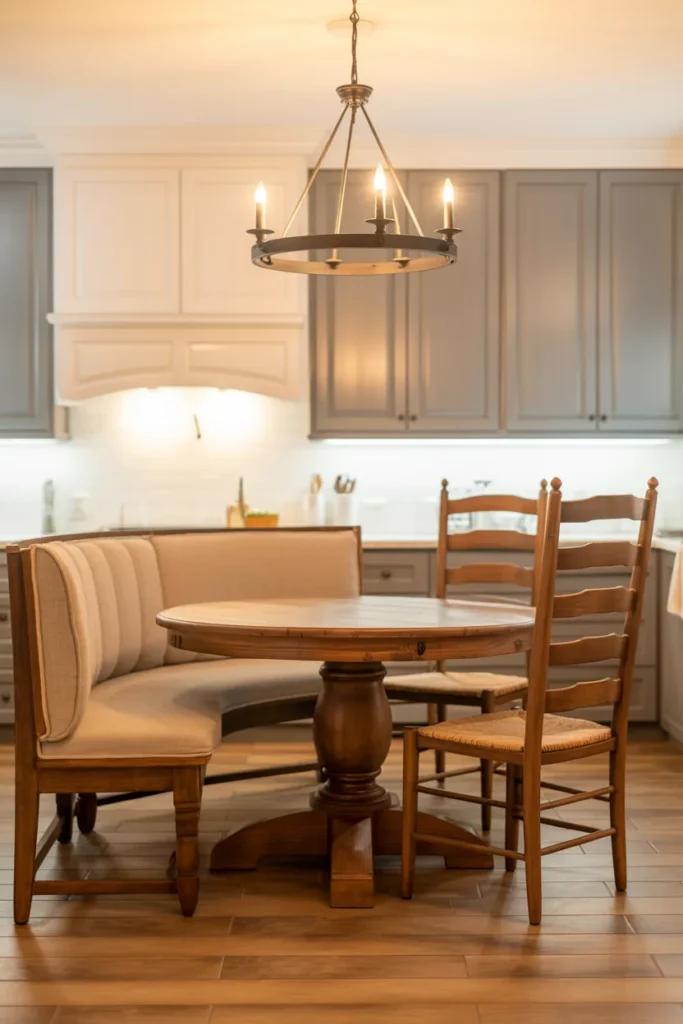
The curved bench, specifically a crescent or half-moon shaped bench designed for round tables, is the detail that makes this work. A straight bench pushed against a round table creates gaps and awkward seating angles. A purpose-matched curved bench sits flush against the table edge and makes the whole arrangement feel cohesive.
This setup is particularly effective in kitchen dining rooms that open to a mudroom, playroom, or family room, where the table gets heavy daily use. Solid wood with a matte or hand-rubbed oil finish holds up better than lacquered or painted surfaces in high-use family settings. Avoid white or very light painted wood surfaces on a primary family dining table unless you are prepared to touch up paint regularly.
8. The Extendable Round Table That Converts for Entertaining Without Wasting Daily Space
An extendable round table solves one of the most common dining dilemmas in American homes — the gap between how many people you feed daily and how many people you host occasionally. In its closed position, a 42 or 48-inch round table serves two to four people efficiently. With a leaf inserted, it extends to an oval that seats six to eight.
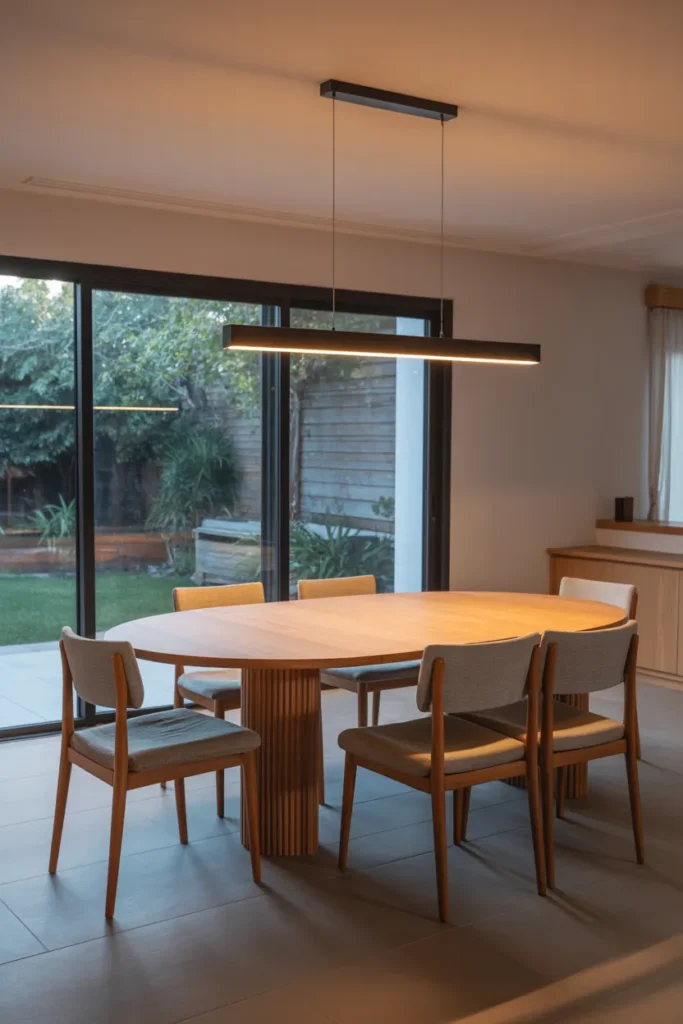
This is the most practical single investment for homeowners who entertain regularly but do not want a large table taking up floor space every day. The extension mechanism matters significantly. Butterfly leaf systems that store inside the table and deploy with a simple pull-apart motion are the most convenient. Separate stored leaves require finding storage space and are frequently lost or warped over time.
When evaluating extendable round table options, test the seam where the extension meets the original tabletop. A poorly fitted leaf creates an uneven surface and a visible ridge that becomes a daily annoyance. High-quality extendable tables have tight, nearly invisible seams in both the open and closed positions.
9. The Round Table in a Kitchen Bay Window Alcove for Maximum Natural Light
Placing a round table directly inside a bay window alcove turns an often underused architectural feature into the most functional and desirable seat in the house. The window wraps around three sides of the seating area, flooding the table with natural light from multiple angles throughout the day, and the defined alcove space gives the dining area a sense of enclosure without walls.
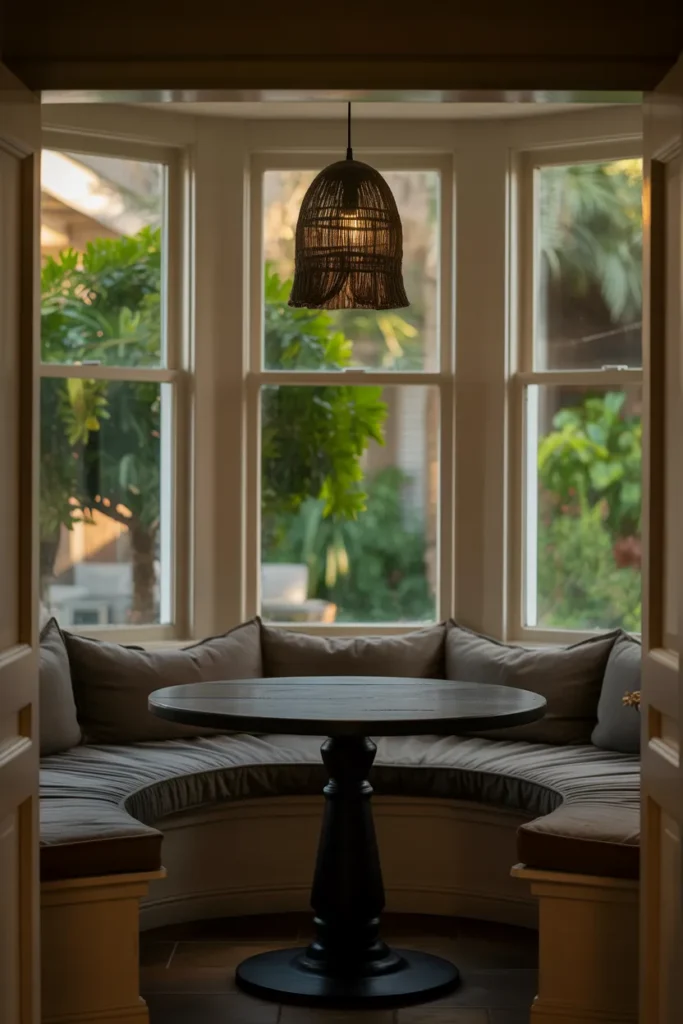
This is one of the most effective round kitchen table ideas for older American homes with bay window construction, which is common in craftsman, colonial, and Victorian-era housing. The round table shape fits the curved or angled bay window geometry far more naturally than a rectangular table, which typically leaves awkward dead corners.
The furniture scale decision is critical here. Measure the interior width of the bay window at the narrowest point and size your table to allow at least 12 inches of clearance between the table edge and the window trim on each side. Crowding the table against the window frame looks cluttered and makes cleaning the sill and glass panels difficult. Bench seating built into the window alcove with storage underneath maximizes the use of this space intelligently.
10. The Statement Round Table With an Oversized Pendant That Defines the Dining Zone in an Open Layout
In a fully open kitchen, living, and dining floor plan with no walls separating the zones, a round dining table paired with a large, intentional pendant light creates a defined dining zone through lighting and scale alone. The pendant acts as an architectural ceiling element that signals where the dining area begins and ends, even when no physical boundary exists.
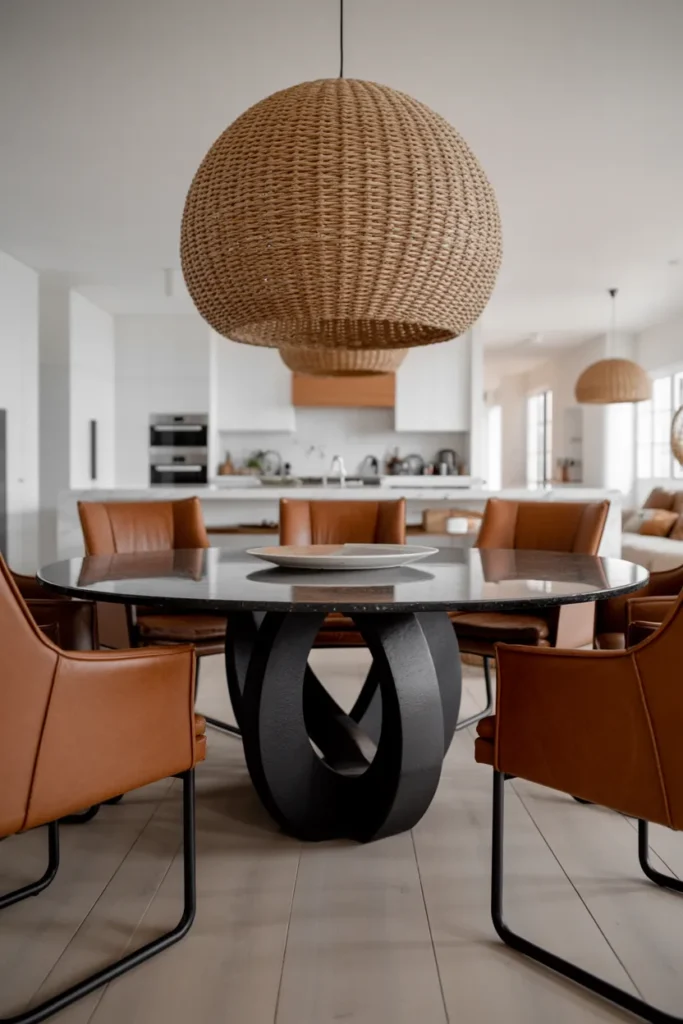
The pendant diameter should relate directly to the table diameter. A standard rule is to keep the pendant between 50 and 75 percent of the table width. For a 48-inch table, a pendant between 24 and 36 inches in diameter reads as proportional. Going too small makes the light look like an afterthought; going too large overwhelms the table and competes with adjacent zones visually.
The table itself in this scenario should be a considered design choice rather than a neutral one, because it will be visible from the kitchen, living room, and entry simultaneously. A sculptural base, a distinctive material, or a strong silhouette gives the dining zone a visual identity that holds the open-plan space together. This is where investing in a table with genuine design presence pays off across the whole room, not just the dining area.
Final Thoughts
The right round kitchen table does not just fill a space — it defines how the room functions and how people move through it every day. Whether you are working with a tight nook, an open-plan layout, or a bay window alcove, one of these ten setups gives you a clear starting point built on practical decisions rather than trends alone.
Save this post to your Pinterest boards before you start shopping. The details here — table diameter, base type, clearance rules, and seating combinations — are easy to forget in the middle of a purchase decision, and having this as a reference will save you from the most common and most costly mistakes. When you are ready to go deeper, explore coordinating kitchen layout and lighting ideas that work alongside your table choice.